

Potatoes—those humble, starchy wonders that have graced dinner tables for centuries. They’re versatile, delicious, and can transform into anything from crispy fries to creamy mashed delights. But how many calories does this beloved tuber actually pack? Spoiler alert: it’s not as scary as you might think!
In a world obsessed with calorie counting, understanding the nutritional value of a potato can help anyone make informed choices. Whether you’re a health nut or just someone who loves a good baked potato, knowing the calorie content can help keep those guilt trips at bay. So let’s dig into the numbers and uncover the truth behind this spud’s caloric mystery. After all, who wouldn’t want to know how many calories they’re savoring with each buttery, fluffy bite?
Overview of Potatoes
Potatoes are a staple food worldwide, appreciated for their taste and versatility. This tuber contains various nutrients, making it a popular ingredient in many dishes. One medium-sized potato, weighing approximately 150 grams, contains about 130 calories. Caloric content varies slightly depending on the cooking method and added ingredients.
They provide essential vitamins and minerals. Potatoes are rich in vitamin C, providing around 30% of the daily recommended intake. These vegetables also contain potassium, which supports heart health by regulating blood pressure. Dietary fiber is present as well, aiding digestion and promoting a feeling of fullness.
Baked potatoes offer a simple yet nutritious option. When prepared without butter or high-calorie toppings, they remain low in calories. Mashed potatoes, on the other hand, can significantly increase calorie count if butter or cream gets added. Choosing cooking methods, such as boiling or steaming, can help retain their natural health benefits.
Different types of potatoes provide varying nutritional profiles. For example, sweet potatoes contain more calories and are also rich in beta-carotene, which the body transforms into vitamin A. Understanding the differences can help individuals make informed dietary choices.
Potatoes deliver a good balance of calories, vitamins, and minerals while being adaptable in numerous recipes. Incorporating them as part of a balanced diet allows for endless culinary possibilities while keeping caloric intake in check.
Nutritional Profile of Potatoes
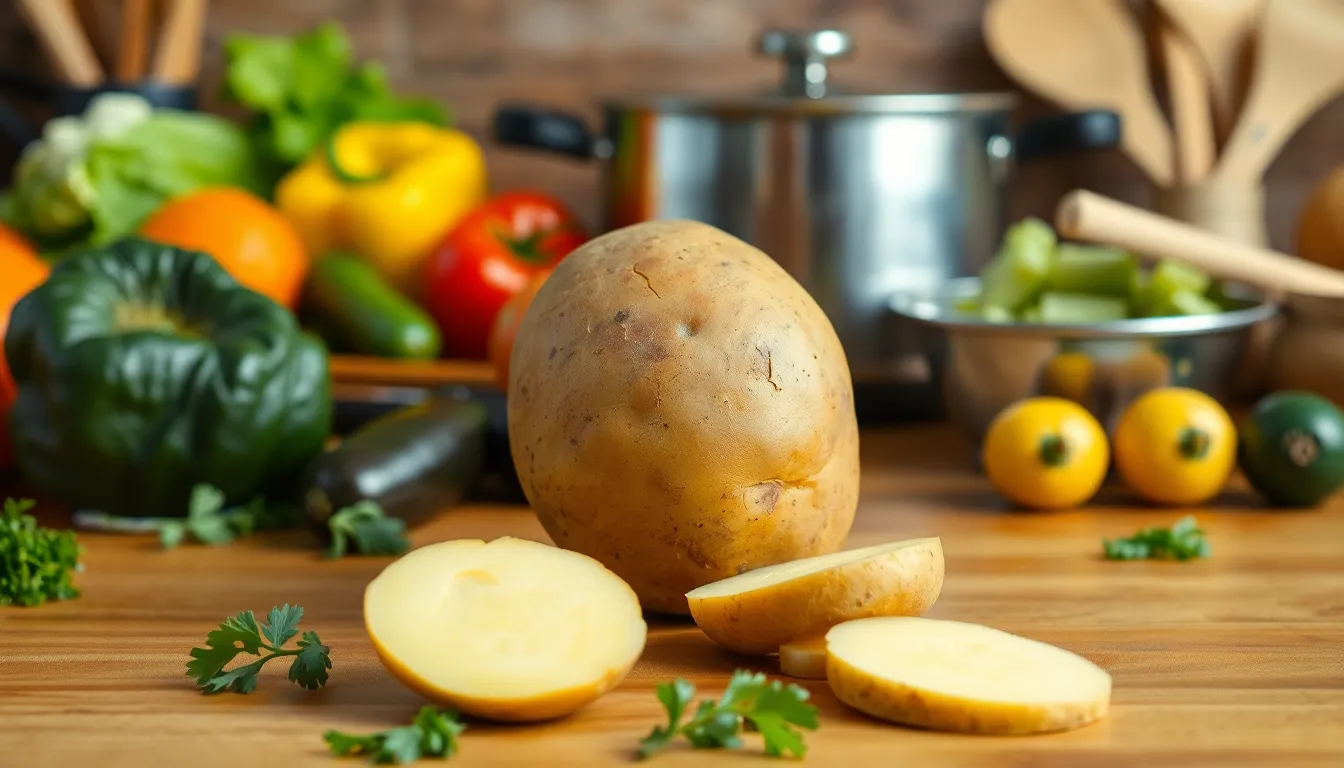
Potatoes provide vital nutrients, making them a significant dietary component. Their caloric content varies based on cooking methods and added ingredients.
Macronutrients
A medium-sized potato contains approximately 30 grams of carbohydrates. This amount primarily contributes to its role as a quick energy source. Protein content in a potato averages around 3 grams, complementing its carbohydrate profile. Fats are minimal, typically under half a gram unless additional ingredients are added. Different cooking methods can alter these macronutrient values slightly. For example, frying potatoes increases fat content significantly, whereas boiling preserves a lower fat profile.
Micronutrients
Potatoes are a great source of essential vitamins and minerals. They contain about 30% of the recommended daily value of vitamin C, important for immune function. Potassium levels are high, averaging 620 milligrams per medium potato, supporting heart and muscle health. Additionally, potatoes provide B vitamins like vitamin B6, which aids in metabolism. The nutrient density can vary among potato types, with sweet potatoes offering higher levels of beta-carotene. Exploring different varieties can enhance the micronutrient benefits.
How Many Calories Does a Potato Have?
Potatoes are an essential food with significant nutritional value. Caloric content varies between raw and cooked forms.
Raw Potatoes
A medium-sized raw potato typically contains about 130 calories. Carbohydrates make up the majority of calories, accounting for approximately 30 grams. The protein content is around 3 grams, while fat is negligible. In addition to calories, raw potatoes provide essential vitamins and minerals, particularly vitamin C and potassium. These nutrients contribute to overall health and well-being. Consumption of raw potatoes is rare, as most prefer cooked options.
Cooked Potatoes
Cooked potatoes present a diverse caloric profile, heavily influenced by the cooking method. Boiling or steaming maintains a caloric content similar to raw potatoes, around 130 calories per medium tuber. Frying potatoes, however, significantly increases their caloric count, often reaching upwards of 300 calories due to added oils. Nutritional benefits remain, with cooked potatoes still offering valuable nutrients like vitamin C and potassium. Those who enjoy mashed potatoes can also expect added calories from ingredients like butter or cream.
Factors Affecting Caloric Content
Understanding the factors that affect the caloric content of potatoes helps individuals make informed decisions. Variations stem from potato types and cooking methods.
Potato Types
Different potato types contribute to variations in caloric content. A medium-sized russet potato contains about 130 calories, while a sweet potato averages around 150 calories due to its higher sugar content. Nutritional profiles vary as well, with sweet potatoes rich in beta-carotene and other vitamins. New potatoes tend to have slightly fewer calories than mature ones, often providing different textures and flavors for various dishes. Individuals seeking options should consider these elements when selecting potatoes for their meals.
Cooking Methods
Cooking methods significantly influence the caloric content of potatoes. Baking or boiling potatoes typically retains their caloric count around 130 calories per medium-sized potato. Steaming also preserves key nutrients while keeping caloric values stable. Frying, on the other hand, drastically increases the calorie count, potentially exceeding 300 calories due to the added oils. Choosing lighter cooking methods enhances health benefits and keeps calorie intake in check. Always consider preparation styles when incorporating potatoes into a diet.
Understanding the calorie content of potatoes can empower individuals to make informed dietary choices. With a medium-sized potato averaging around 130 calories and offering essential nutrients like vitamin C and potassium, it’s clear that potatoes can fit well into a balanced diet.
By opting for healthier cooking methods such as baking or boiling, one can enjoy their nutritional benefits without excessive calories. Whether someone prefers russets or sweet potatoes, there’s a variety to suit different tastes and dietary needs. Ultimately, potatoes remain a versatile and nutritious food choice that can enhance meals while providing valuable nutrients.