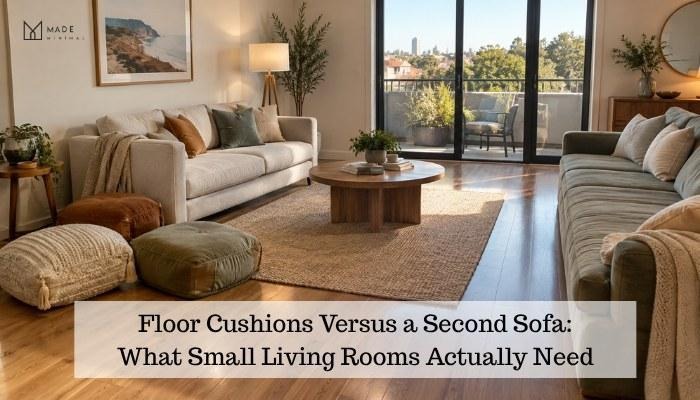
Squeeze a second sofa into a small living room and watch your floor space disappear overnight. Most small living room ideas promise more comfort, but they end up making the room feel smaller instead.
Honestly, there’s a simpler fix, and it starts at floor level. Made Minimal stocks a range of floor cushions built for exactly this. They’re low, soft, and don’t box in your room the way a second sofa does.
The article pits floor cushions against a second sofa on cost, flexibility, and everyday comfort in small Australian apartments. You’ll walk away knowing which one your room needs.
So, let’s look at why extra seating backfires so often.
Why Small Living Rooms Struggle With Extra Seating
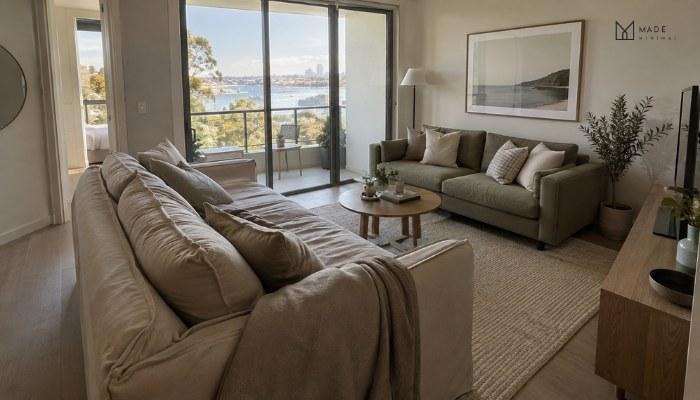
Small living rooms work with a fixed footprint. Every chair or sofa you add competes with walking space and the furniture already there. It’s a tight balancing act, and one wrong piece throws the whole room off completely.
Here’s where the second sofa temptation usually goes wrong, and where flexible seating starts to make more sense:
What Happens When You Squeeze in a Second Sofa
Picture trying to walk past a second sofa without turning sideways. That’s the reality in most small living rooms. A second sofa often blocks walkways or forces awkward furniture angles you didn’t plan for, and it usually happens much faster.
On top of that, bulky frames make small living room ideas harder to pull off well. Your open floor plan stops feeling open at all. Even a compact two-seater can make a small room feel like a hallway.
The room feels more cramped, despite the sofa taking up less space than you might assume. So, before buying another seat, it’s worth asking if the room can handle another one.
Why Small Living Room Ideas Favour Flexible Seating
If you’ve ever hosted a game night and run out of places to sit, you already know why flexible seating wins. It adapts to guests, movie nights, or that sudden need for extra floor space, and doesn’t lock you into one layout.
Simply put, you can move or store away lightweight pieces in seconds when you don’t need them. That’s the whole point: seating that works with your week instead of sitting in the way. Once you’ve tried it, going back to a fixed sofa setup feels backwards.
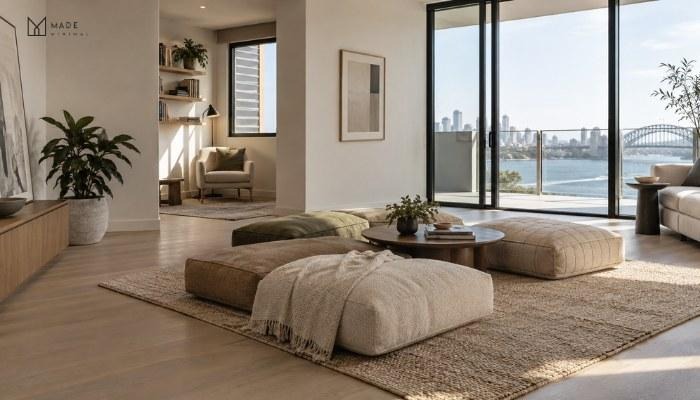
Floor cushions suit apartments where furniture has to multitask daily. We’ve seen this in Brisbane apartments, where one corner becomes a reading nook by day and extra seating by night. It’s a small shift that changes how the whole room gets used.
Floor Cushions or a Second Sofa: Comparing Your Options
Once you’ve weighed the space issue, the next thing worth checking is what each option costs you. Price and flexibility often decide this before comfort even enters the picture.
The two choices come with different costs and space requirements, so it’s worth comparing them:
Comparing Cost and Flexibility
A second sofa might look like the obvious upgrade, until you see the price tag next to a set of cushions. Second sofas require a much larger upfront investment than floor cushions. Most floor cushions stay below the three-figure mark.
Meanwhile, floor cushions store flat, while sofas need permanent dedicated floor space whether you use them daily or not. That’s the main trade-off: less upfront cost against less long-term comfort. So, flexibility clearly favours cushions here.
Comfort over the long run still makes a sofa the stronger choice, though, especially for everyday lounging. It really comes down to how you’ll use the space most. Either way, comparing the cost gap helps you choose with confidence.
Fitting Either Option Into an Australian Apartment
With cost and flexibility covered, there’s still the question of getting either one through your front door. In our experience, narrow apartment entries often cause problems on delivery day. Measure your doorways beforehand, rather than relying on the floor plan alone.
Apartment floor plans often combine one open-plan living and dining zone. Older apartment blocks often have narrow doorways that limit sofa delivery, and lifts don’t always help either. It’s a common issue in older Brisbane buildings.
Floor cushions skip the delivery hassle entirely, no lift or stairwell needed. You can simply carry them in and set them down. So, if access is tight, cushions remove that whole problem from the equation.
Using Floor Cushions as a Room Divider and Style Piece
When floor cushions are used well, they can zone a room and create a stronger focal point without a single extra piece of furniture. It’s a style trick worth knowing before you buy anything else.
A few carefully placed floor cushions can refresh the look and feel of your living space:
Creating Visual Interest Without Clutter
A simple cushion arrangement can do what an extra chair never will: add personality without adding bulk. Mixed colours and textures bring personality into the room without needing extra furniture (think linen next to a chunky knit, rather than five identical cushions).
Grouped cushions also work as a room divider by marking out a reading nook or floor seating zone. This gives the eye somewhere natural to land. Layering textures adds visual interest without shrinking the room visually.
Even a small colour change between cushions can shift how a corner feels. It’s a low-cost way to add variety and draw attention where you want it. But of course, even the best-looking setup can go wrong pretty quickly.
Common Mistakes With Floor Cushion Layouts
The most common mistake with floor cushions is piling too many into one corner instead of spreading them out. We’ve walked into plenty of Brisbane apartments where one cushion pile ate up an entire corner.
That said, mismatched sizes create a messy look instead of a styled one, so it helps to keep a consistent scale. Ignoring walkway space defeats the purpose of choosing cushions at all. That kind of layout undoes all the benefits floor seating usually offers.
We’ve seen this firsthand, with cushions spread across a room creating a more balanced look than clustered seating. A little planning goes a long way here. A well-planned layout makes the room feel more open instead of crowded.
Your Next Move: Pick What Fits the Room
So, where does that leave you? A second sofa offers comfort, but it eats up space fast in a small living room. Floor cushions offer nearly the same comfort with far more flexibility.
If your room already feels tight, floor cushions are the easier win. They cost less, skip delivery headaches, and double as a room divider or style piece. A second sofa still makes sense if daily lounging is your priority over floor space.
Ready to find the right fit? Made Minimal‘s floor cushion range is a good place to start, and your small living room will thank you for it.